Niewielkie dziecko potrafi stworzyć zaskakująco intensywną rutynę przewijania. Noworodki mogą wymagać wielu zmian pieluch każdego dnia, dlatego odpowiednia organizacja strefy przewijania ma większe znaczenie, niż spodziewa się większość rodziców. Wiedza o tym, jak wybrać kosz na pieluchy, pomoże Ci zatrzymać nieprzyjemne zapachy, ograniczyć bieganie do domowego śmietnika i sprawić, że nocne przewijanie stanie się nieco mniej chaotyczne.
Najlepszy wybór to nie tylko kwestia rozmiaru. Chodzi o to, jak dobrze kosz pasuje do Twojego domu, nawyków i codziennego rytmu dziecka.
💡 Kluczowe wnioski
- Skuteczny kosz na pieluchy musi posiadać wielowarstwowy system uszczelniający, który zapobiega rozprzestrzenianiu się nieprzyjemnych zapachów w pokoju dziecięcym.
- Mechanizm bezdotykowego otwierania za pomocą pedału nożnego znacząco ułatwia zachowanie higieny, gdy ręce rodzica są zajęte podczas przewijania noworodka.
- Wybór modelu kompatybilnego ze standardowymi workami na śmieci jest bardziej ekonomicznym rozwiązaniem na dłuższą metę niż zakup pojemników wymagających dedykowanych wkładów.
- Optymalna pojemność kosza oraz wbudowana blokada dziecięca to niezbędne funkcje, które zapewniają bezpieczeństwo i dostosowują pojemnik do codziennej rutyny domowej.
Co to jest kosz na pieluchy i dlaczego go potrzebujesz?
Kosz na pieluchy to specjalistyczny pojemnik na śmieci przeznaczony na zużyte pieluchy. W przeciwieństwie do zwykłego kosza na śmieci, został zaprojektowany z funkcjami blokującymi zapachy, zakrytymi otworami i dostosowanymi do pieluch systemami worków, które pomagają zapobiegać rozprzestrzenianiu się nieprzyjemnych zapachów w pokoju dziecięcym.
Ilość zmian pieluch noworodka rośnie błyskawicznie. Amerykańska Akademia Pediatrii (AAP) wyjaśnia w swoich wytycznych dotyczących przewijania noworodków, że wielu rodziców może zmieniać od 8 do 12 pieluch dziennie we wczesnym okresie opieki nad dzieckiem. Przy tak dużej liczbie pieluch przewijających się przez pokój malucha, kosz na pieluchy może szybko stać się jednym z najbardziej praktycznych elementów wyposażenia.
Główne korzyści są proste:
- Lepsza kontrola zapachów: Szczelna konstrukcja pomaga zatrzymać zapach pieluch wewnątrz kosza, zamiast pozwalać mu rozchodzić się po pokoju.
- Większa wygoda: Nie musisz wynosić każdej pieluchy do zewnętrznego kosza na śmieci, co jest szczególnie pomocne nocą lub w wielopiętrowym domu.
- Czystsza strefa przewijania: Dedykowany kosz trzyma zużyte pieluchy w jednym miejscu i pomaga utrzymać czystszą strefę przewijania.
- Design dopasowany do pokoju dziecięcego: Wiele nowoczesnych koszy na pieluchy zostało zaprojektowanych tak, aby wyglądać estetycznie, kompaktowo i dobrze komponować się obok przewijaka.
Zwykły kosz na śmieci może sprawdzić się w awaryjnej sytuacji, ale nie jest przystosowany do zapachu, objętości i częstotliwości wymiany pieluch. Kosz na pieluchy zapewnia kącikowi do przewijania bardziej zorganizowany system.
Jak wybrać kosz na pieluchy: kluczowe czynniki do porównania
Najlepszy kosz na pieluchy nie zawsze jest największy ani najdroższy. Powinien dobrze zatrzymywać zapachy, łatwo się otwierać, współgrać z preferowanymi workami i pasować do Twojej przestrzeni. Przed zakupem porównaj cechy, które wpływają na codzienne użytkowanie.
1. Porównaj materiał wykonania
Kosze na pieluchy są najczęściej wykonane z tworzywa sztucznego, metalu lub mieszanki trwałych materiałów.
Plastikowe kosze na pieluchy są zazwyczaj lekkie, przystępne cenowo i dostępne w większej liczbie kolorów czy kształtów. Łatwo je przenosić i często są wyposażone w praktyczne funkcje, takie jak szerokie otwory czy pedały nożne. Aby zapewnić najlepszą długotrwałą świeżość, szukaj gładkich powierzchni wewnętrznych, solidnych uszczelek i łatwej do czyszczenia konstrukcji.
Metalowe kosze na pieluchy, a w szczególności modele ze stali nierdzewnej, są często cenione za elegancki wygląd i odporność na wchłanianie zapachów. Mogą kosztować więcej, ale trafiają do rodziców, którzy wolą bardziej nowoczesny wygląd pokoju dziecięcego. Jednak sam materiał nie powinien być jedynym kryterium wyboru. Skuteczny system uszczelnienia, gładkie wnętrze i łatwa w czyszczeniu konstrukcja mogą mieć równie duże znaczenie w codziennym użytkowaniu.
Materiał ma znaczenie, ale nie powinien być jedyną decydującą kwestią. Dobrze zaprojektowany system uszczelniający może być ważniejszy niż sama zewnętrzna obudowa.
2. Skup się na systemie kontroli zapachów
Kontrola zapachów to główny powód, dla którego rodzice kupują kosz na pieluchy. Dobry system powinien zatrzymywać nieprzyjemne zapachy, gdy pokrywa jest zamknięta, i ograniczać ich ulatnianie się podczas wrzucania pieluchy.
Szukaj funkcji takich jak:
- Hermetyczne uszczelki pokrywy: Pomagają blokować zapachy między zmianami pieluch.
- Obrotowe lub zakryte otwory: Ograniczają bezpośredni dostęp powietrza podczas wrzucania pieluchy.
- Systemy zaciskowe: Zacisk pomaga odizolować część z workiem i ogranicza uwalnianie zapachów.
- Filtry neutralizujące zapachy: Pomagają neutralizować zapachy wewnątrz kosza.
- Trwałe, dobrze dopasowane worki: Mocne worki pomagają zatrzymać wilgoć i sprawiają, że wyrzucanie odpadów jest czystsze.
Sprawdza się tu prosta zasada: im mniej okazji do ucieczki zapachu, tym świeższe powietrze w pokoju dziecięcym.
3. Wybierz łatwą obsługę bez użycia rąk
Zmiana pieluch rzadko przebiega w spokojnej atmosferze. Dobry kosz na pieluchy powinien być prosty w otwieraniu, łatwy do opróżniania i na tyle higieniczny w obsłudze, by dało się go używać, gdy masz ręce zajęte chusteczkami, kremem lub wiercącym się maluszkiem.
- Otwieranie bez użycia rąk: Pedał nożny sprawia, że pozbywanie się pieluszek jest czystsze i łatwiejsze. Pozwala wrzucić zużytą pieluchę bez dotykania kosza dłonią. Jest to szczególnie pomocne podczas czynności wykonywanych jedną ręką lub w trakcie nocnego przewijania.
- Wymiana i opróżnianie worka: Sprawdź, jak łatwo można wyjąć pełny worek, zawiązać go i zastąpić nowym. Konstrukcja z szerokim otworkiem ułatwia wrzucanie nieporęcznych pieluch, a prosta budowa wewnętrzna ogranicza bałagan przy usuwaniu śmieci. Najlepszy kosz na pieluchy nie powinien sprawiać trudności podczas czyszczenia ani opróżniania po codziennym użytkowaniu.
4. Przemyśl kompatybilność worków i koszty długoterminowe
Niektóre kosze na pieluchy wymagają specjalnych wkładów lub dedykowanych worków. Są one zaprojektowane do współpracy z danym koszem i mogą oferować skuteczną kontrolę zapachów. Mogą jednak zwiększać całkowity koszt użytkowania na przestrzeni miesięcy lub lat.
Inne kosze na pieluchy współpracują ze standardowymi workami na śmieci. Może to być wygodniejsze, ponieważ możesz używać worków, które i tak kupujesz do domu. Ułatwia to również dokupienie zapasów. Skorzystaj z tego szybkiego porównania przed dokonaniem wyboru:
| Cecha | Dlaczego ma znaczenie | Na co zwrócić uwagę |
|---|---|---|
| Uszczelnienie zapachów | Zatrzymuje nieprzyjemne zapachy wewnątrz kosza | Szczelna pokrywa, zacisk lub zakryta strefa wrzucania |
| Pedał nożny | Zapewnia higieniczne wyrzucanie | Stabilny pedał i płynne otwieranie |
| Rodzaj worka | Wpływa na koszty długoterminowe | Możliwość używania standardowych worków na śmieci lub przystępne cenowo wkłady |
| Pojemność | Reguluje częstotliwość opróżniania | Wystarczająco dużo miejsca na dzienną ilość pieluch |
| Wbudowana blokada dziecięca | Pomaga przy ciekawości malucha | Zamykana pokrywa lub konstrukcja zabezpieczona przed dziećmi |
Kosz na pieluchy powinien być łatwy w utrzymaniu po pierwszym tygodniu, a nie tylko wywoływać dobre wrażenie na stronie produktu. Koszt worków i wygoda uzupełniania zapasów mogą mieć z czasem duże znaczenie.

5. Dopasuj pojemność do swojej rutyny
Pojemność oznacza, ile pieluch kosz może pomieścić, zanim zajdzie potrzeba jego opróżnienia. Mały kosz może sprawdzić się w kompaktowym pokoju dziecięcym, ale może wymagać częstego opróżniania. Większy kosz pomieści więcej pieluch, jednak nadal wymaga dobrego systemu uszczelniającego.
Dla wielu rodzin praktycznym celem jest kosz, który mieści około 20 do 30 pieluch. Zapewnia to wystarczająco dużo miejsca do codziennego użytku, nie pozwalając pieluchom leżeć zbyt długo.
Przemyśl swój styl życia:
- Jeśli pokój dziecięcy znajduje się na piętrze, wybierz kosz, który ograniczy schodzenie na dół.
- Jeśli mieszkasz w małym mieszkaniu, wybierz kompaktowy kształt ze skuteczną kontrolą zapachów.
- Jeśli masz bliźnięta lub dwójkę dzieci w pieluchach, pojemność staje się ważniejsza.
- Jeśli wolisz opróżniać śmieci codziennie, mniejszy kosz może w zupełności wystarczyć.
Właściwy rozmiar to taki, który odpowiada temu, jak często realistycznie chcesz wynosić śmieci.
6. Sprawdź bezpieczeństwo i styl pieluszkowania
Kosz na pieluchy powinien pasować do etapu rozwoju Twojego dziecka oraz Twojej rutyny przewijania. Warto sprawdzić zwłaszcza dwa detale:
- Wbudowana blokada dziecięca: Wbudowana blokada dziecięca pomaga zapobiegać otwieraniu kosza przez ciekawskie niemowlęta, raczkujące maluchy czy zwierzęta domowe. Staje się to ważne, gdy dziecko zaczyna raczkować lub chodzić.
- Kompatybilność z pieluchami wielorazowymi: Jeśli używasz pieluch wielorazowych, wybierz kosz, który współpracuje z wodoodpornym workiem do prania. Powinien być również wystarczająco duży dla Twojej metody przechowywania pieluch na sucho lub na mokro między praniami.
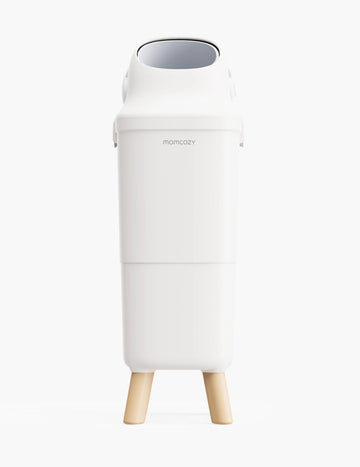
Wyróżniony produkt: kosz na pieluchy z potrójnym uszczelnieniem Momcozy
Po porównaniu kontroli zapachów, kompatybilności worków i łatwości użytkowania, kosz na pieluchy z potrójnym uszczelnieniem Momcozy jest praktyczną opcją do rozważenia. Skupia się na cechach, na których rodzicom zależy najbardziej podczas codziennej zmiany pieluch.


- Opatentowany system potrójnego uszczelnienia: System potrójnego uszczelnienia dodaje wiele warstw ochrony, aby pomóc zatrzymać nieprzyjemne zapachy pieluch. Zamiast polegać na samej zwykłej pokrywie, konstrukcja pomaga ograniczyć ulatnianie się zapachów podczas wrzucania pieluch oraz gdy kosz jest zamknięty. Odpowiada to bezpośrednio na jeden z najważniejszych powodów, dla których rodzice w ogóle szukają kosza na pieluchy.
- Można używać standardowych worków na śmieci: Kosz pasuje do standardowych worków na śmieci ze ściągaczem o pojemności 13 galonów (ok. 50 l), dzięki czemu rodzice nie muszą polegać wyłącznie na specjalnych wkładach. Może to uczynić długoterminowe użytkowanie wygodniejszym i bardziej ekonomicznym, szczególnie w domach, w których i tak używa się zwykłych worków na śmieci. Ułatwia to również uzupełnianie zapasów, gdy zaczyna ich brakować.
- Funkcje przyjazne dla użytkownika: Obejmuje konstrukcję z szerokim otworkiem do obsługi bez użycia rąk, wbudowaną blokadę dziecięcą, filtr neutralizujący zapachy oraz elegancki wygląd pasujący do pokoju dziecięcego. Pedał nożny ułatwia wyrzucanie pieluch, gdy masz zajęte ręce, a blokada bezpieczeństwa zapobiega otwieraniu kosza przez ciekawskie maluchy. Jego estetyczny wygląd sprawia również, że dobrze komponuje się w pokoju dziecięcym, nie wyglądając jak zwykły pojemnik na śmieci.

Często zadawane pytania
Q1. Jak wybrać odpowiedni kosz na pieluchy?
Aby wybrać odpowiedni kosz na pieluchy, skup się na kontroli zapachów, obsłudze bez użycia rąk, kompatybilności worków, pojemności i funkcjach bezpieczeństwa dzieci. Dobry kosz powinien pasować do Twojej przestrzeni i ułatwiać wyrzucanie pieluch zarówno w dzień, jak i w nocy.
Q2. Jaki jest najlepszy kosz na pieluchy do kupienia?
Najlepszy kosz na pieluchy to taki, który skutecznie zatrzymuje nieprzyjemne zapachy, łatwo się otwiera i nie komplikuje wymiany worków. Dla wielu rodzin model ze skutecznym uszczelnieniem, pedałem nożnym i możliwością używania standardowych worków na śmieci oferuje praktyczną równowagę między świeżością a wygodą.
Q3. Który kosz na pieluchy nie wymaga specjalnych wkładów?
Niektóre kosze na pieluchy zostały zaprojektowane tak, aby współpracować ze zwykłymi kuchennymi workami na śmieci zamiast ze specjalnymi wkładami. Może to uprościć codzienne użytkowanie, ponieważ rodzice mogą korzystać z worków, które już mają w domu, zachowując jednocześnie korzyści z dedykowanego systemu utylizacji pieluch.
Q4. Jak często należy opróżniać kosz na pieluchy?
Większość rodzin opróżnia kosz na pieluchy co 1 do 3 dni, w zależności od wieku dziecka, liczby pieluch i pojemności kosza. Regularne opróżnianie pomaga utrzymać świeżość w pokoju dziecięcym i ułatwia wymianę worków.
Wybierz czystszą i mniej kłopotliwą rutynę przewijania
Dobry kosz na pieluchy pomaga utrzymać świeżość w pokoju dziecięcym, czystość w strefie przewijania oraz sprawia, że codzienna rutyna staje się łatwiejsza do opanowania. Skup się na kontroli zapachów, obsłudze bez użycia rąk, kompatybilności worków, pojemności i funkcjach bezpieczeństwa. Dla rodziców, którzy oczekują skutecznego uszczelnienia połączonego z wygodą używania standardowych worków na śmieci, kosz na pieluchy z potrójnym uszczelnieniem Momcozy jest opcją wartą rozważenia. Wybierz kosz, który najlepiej pasuje do Twojej przestrzeni i ułatwia każde przewijanie.