You reach for something on the nightstand and feel that familiar tightening deep in your lower back. It started around week 14 and has been getting harder to ignore. Back discomfort is one of the most common experiences during pregnancy, but it responds well to consistent, gentle movement. Pregnancy stretches for lower back pain are one of the most practical ways to get real relief. What works, and when to do it, changes as your pregnancy progresses, so this guide breaks it down trimester by trimester.
Can Pregnancy Stretches Relieve Lower Back Pain?
Yes. For most pregnant women, regular lower back stretches and gentle movement reduce pain and improve daily comfort. Research from the American College of Obstetricians and Gynecologists (ACOG) supports exercise as a safe and effective approach to managing back pain during pregnancy.
A few conditions apply. If you have a high-risk pregnancy, placenta previa, or have been advised to limit activity, check with your healthcare provider (your OB, midwife, or doctor) before starting any new routine. For most healthy pregnancies, gentle stretching while pregnant is not only safe. It is actively recommended.
Why Your Lower Back Hurts More Each Trimester
Several physical changes drive lower back pain during pregnancy, and they build on each other over time.
Your center of gravity shifts forward as your baby grows, which puts extra load on your lower back muscles. The hormone relaxin loosens your ligaments and joints throughout pregnancy. This helps with birth, but it also reduces the structural support your spine normally relies on.
Your abdominal muscles stretch and weaken, which means your back has to work harder to keep you upright. Your breasts get heavier, which pulls your shoulders forward and strains the muscles of your upper and mid-back.
By the third trimester, all of these factors are in full effect at once. That is why back pain tends to peak later in pregnancy, and why stretching and movement matter more, not less, as your due date approaches.
What Are the Benefits of Exercise During Pregnancy
Regular stretching exercises for pregnancy do more than reduce pain in the moment. Here is what consistent movement supports over time:
- Lower back and pelvic discomfort decreases when the muscles around your spine stay active and mobile.
- Posture improves when your core and hip muscles get regular gentle activation.
- Pelvic floor strength builds with seated and supported movement, which matters for both pregnancy and recovery.
- Stress and tension ease with deep, rhythmic breathing during stretches.
- Labor preparation happens naturally through pelvic mobility work in the second and third trimesters.
Even 10 to 15 minutes of stretching per day produces noticeable results over one to two weeks.
How to Ease Lower Back Pain While Pregnant
These moves focus on the lumbar spine, pelvis, and surrounding muscles. An exercise ball is helpful for most of them. It adds gentle instability that activates the core while keeping the positions comfortable.
First Trimester
Your energy levels vary, but the first trimester is a good time to build habits and prevent early soreness.
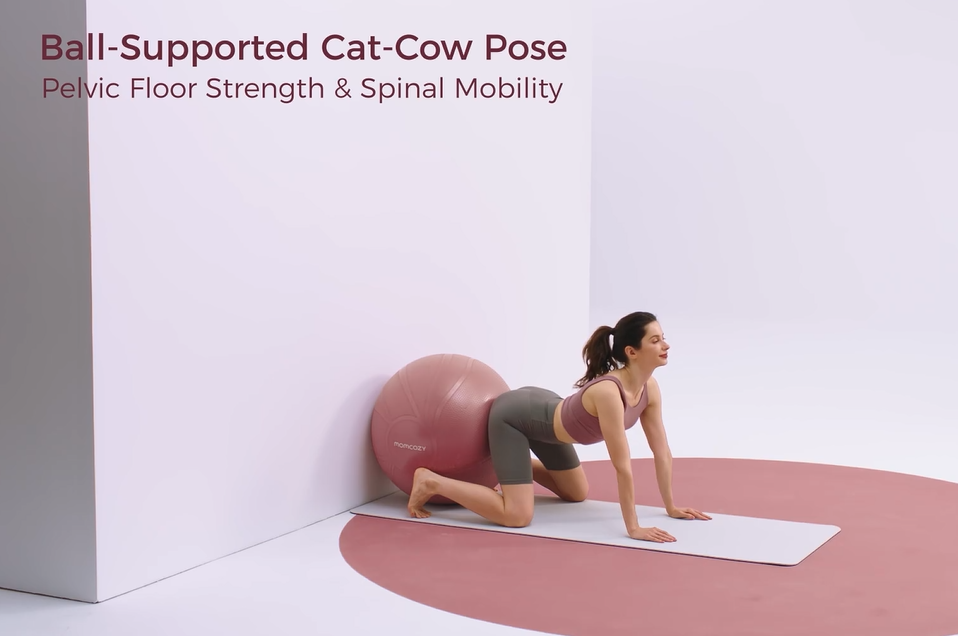
Ball-Supported Cat-Cow Pose
Place hands and knees shoulder-width apart, hips pressed into the ball. Use abdominal breathing. As you exhale, round your back, draw your navel toward your spine, chin toward your belly. As you inhale, let the back soften into a gentle arch, lifting chest and gaze forward.
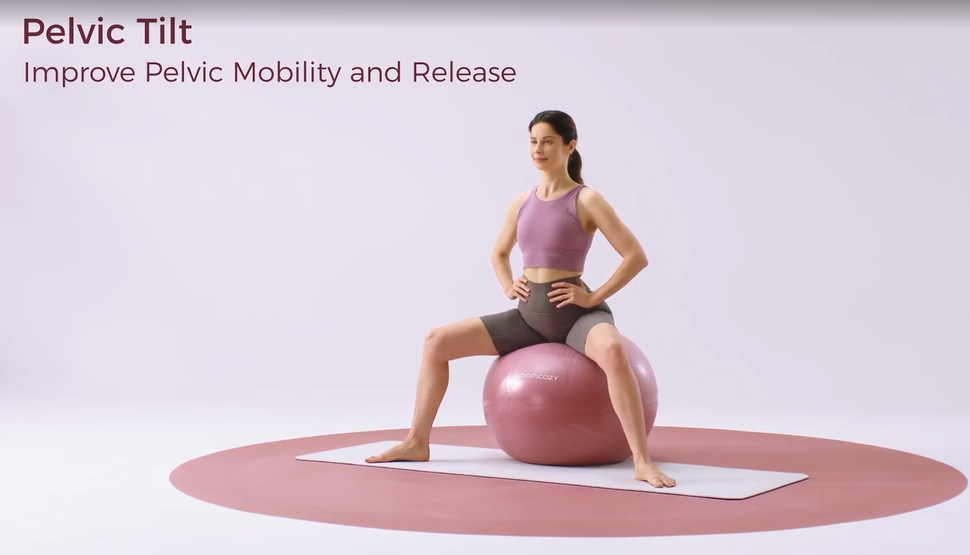
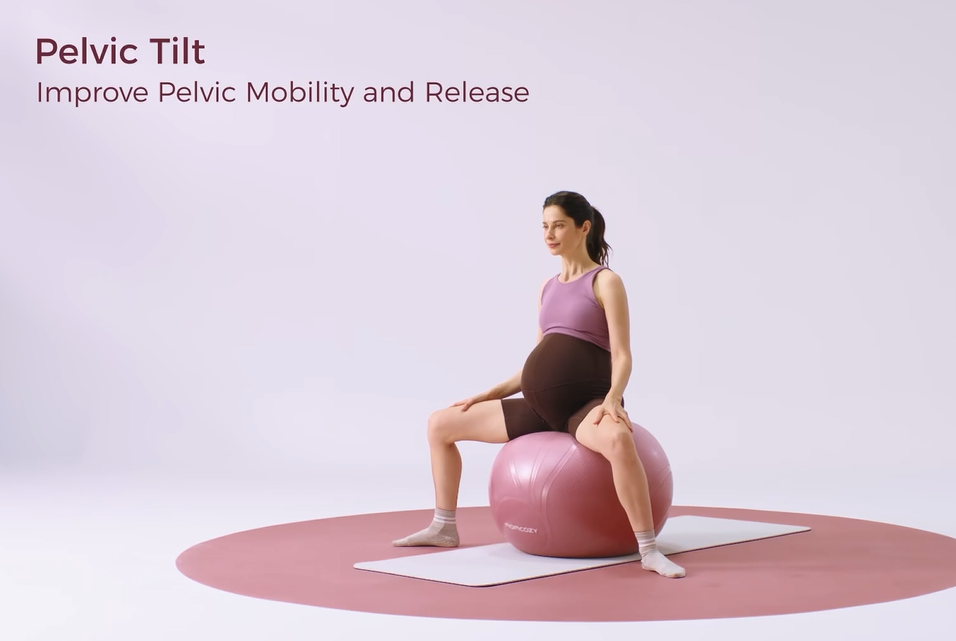
Pelvic Tilt
Sit right in the center of the yoga ball, grounding both feet firmly on the floor. As you inhale, gently tilt the pelvis forward, abdomen relaxed and chest opening. As you exhale, draw the pelvis back, gently tucking the tailbone under, lower back lengthening with ease.
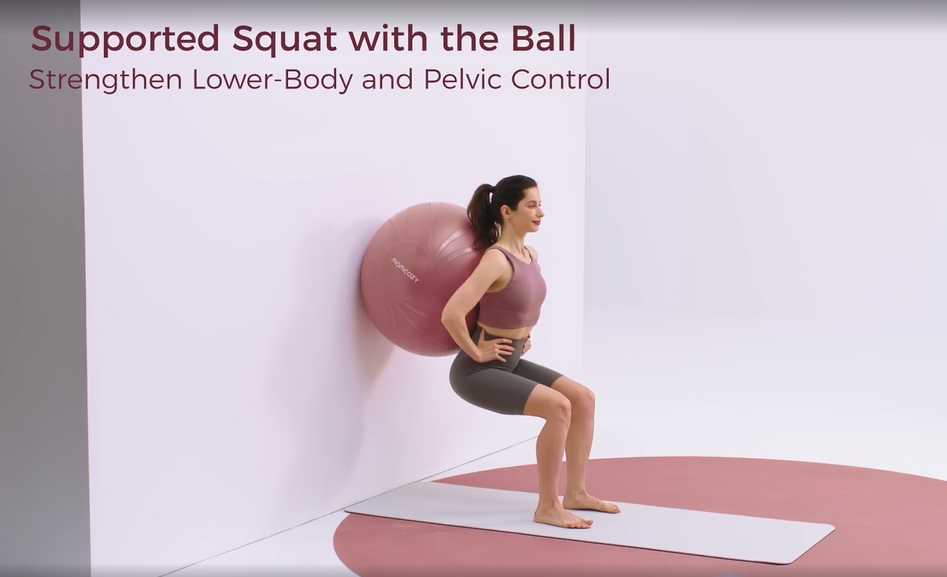
Supported Squat with the Ball
Align the bottom of the ball with the hips, lower back resting against it, feet slightly wider than shoulder-width. Inhale to slowly lower into a squat, ball rolling along the spine. Pause when thighs are close to parallel to the floor. Exhale to rise back up.
Second Trimester
Your belly is growing and your center of gravity is shifting. These moves adapt to that change while targeting lower back tension directly.
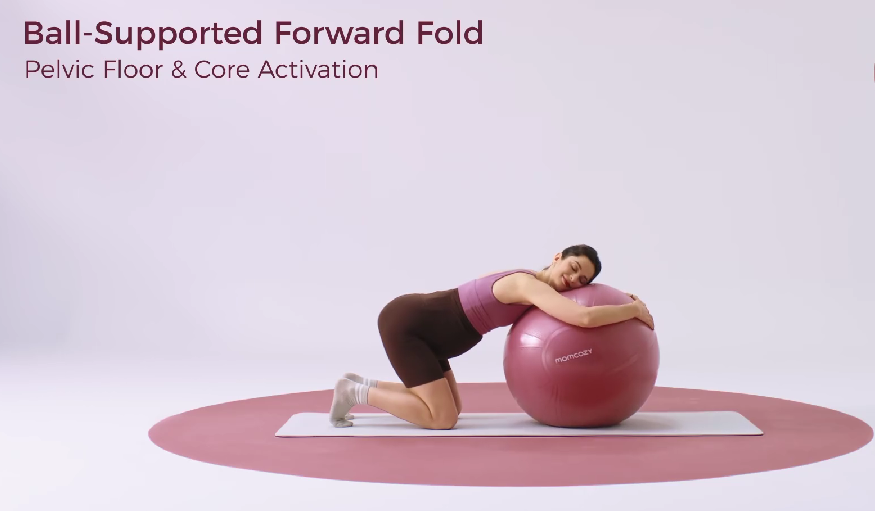
Ball-Supported Forward Fold
Come into an all-fours position, knees hip-width apart, upper chest resting forward onto the ball, torso parallel to the floor. Use natural breathing. Let the hips guide the upper body in slow clockwise circles, then counterclockwise.
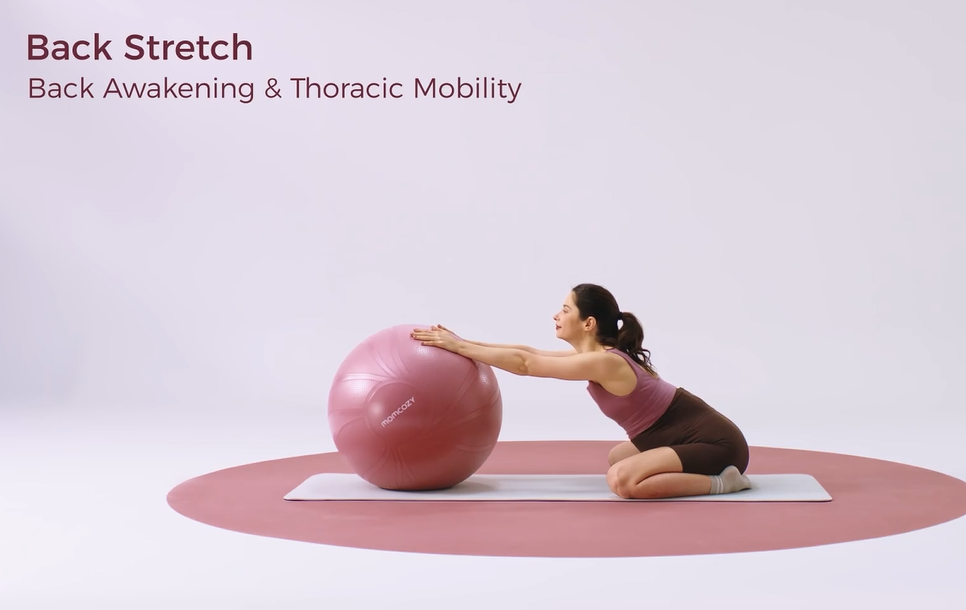
Back Stretch
Kneel on the mat, knees slightly wider, toes touching, hips toward heels, hands on the ball. Inhale to prepare. As you exhale, extend both arms forward and slowly roll the ball away, pelvis gently sitting back, back lengthening. Inhale to draw the ball back.
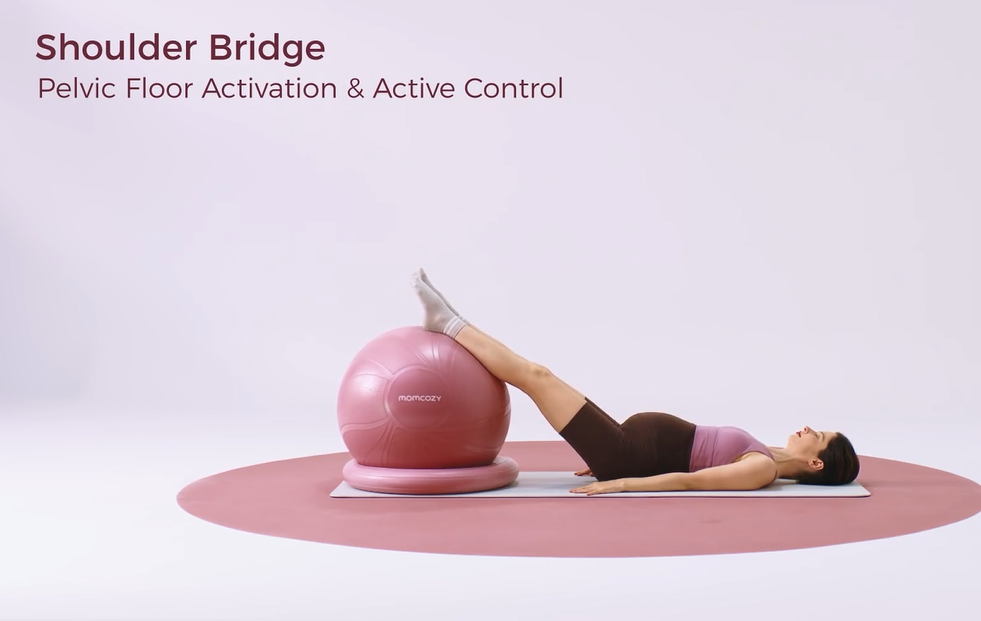
Shoulder Bridge
Lie on your back on the mat, place your feet on the ball, and keep a gentle bend in your knees. As you exhale, slowly lift the hips, allowing the body to form a straight line from the shoulders to the knees. Inhale to return to the starting position. Let the effort come mainly from the glutes, so the lower back and hamstrings don't take over.
Third Trimester
At this stage, the priority shifts to pain relief, pelvic opening, and preparing for birth. Gentleness matters more than intensity.
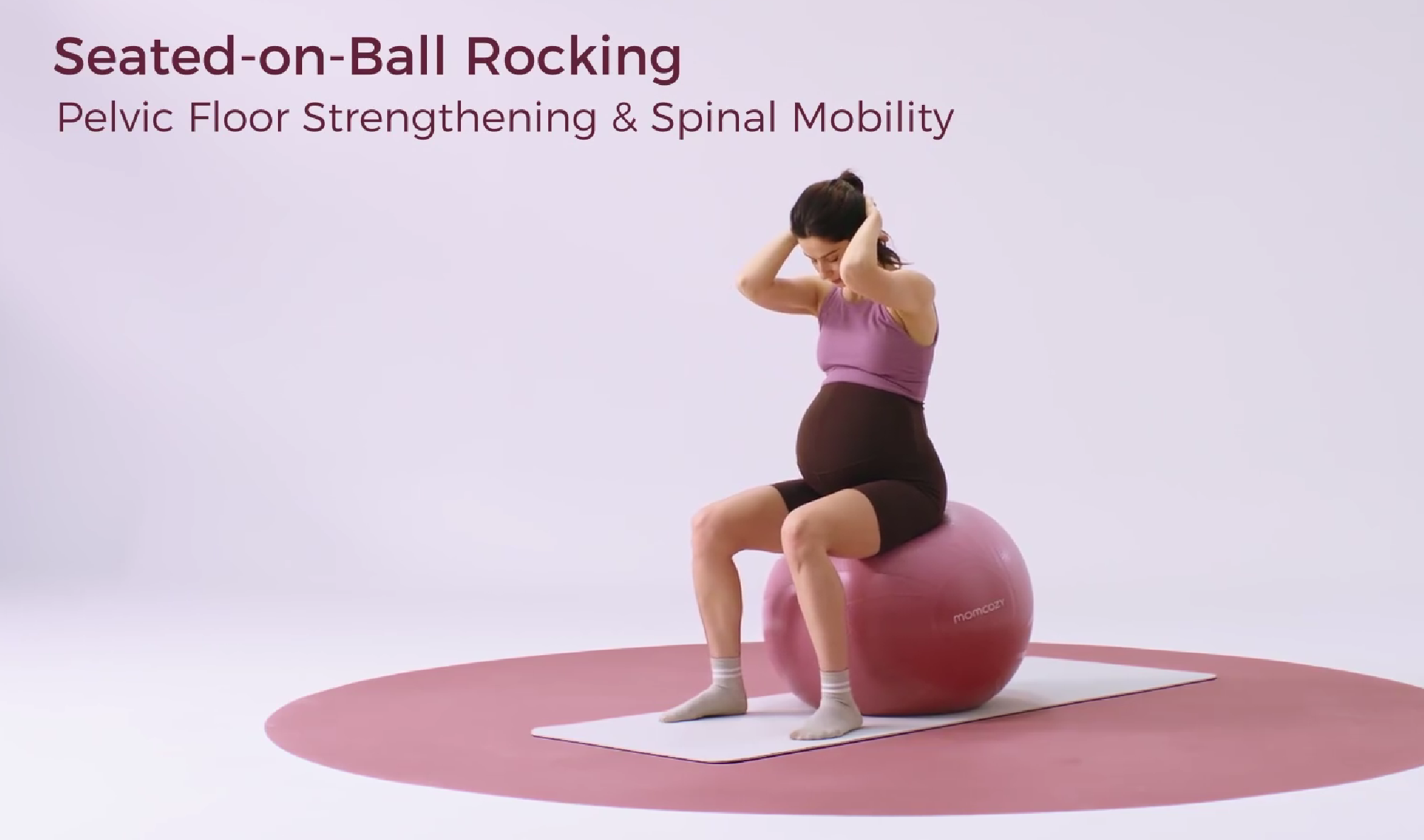
Seated-on-Ball Rocking
Sit right in the center of the ball, feet slightly wider than shoulder-width, hands behind the head. As you exhale, draw the lower belly in, tuck the chin, round through the back, ball rolling slightly forward. Inhale to return, spine lengthening, elbows opening out. Keep movements slow and controlled.
Pelvic Tilt
Sit right in the center of the yoga ball, grounding both feet firmly on the floor. As you inhale, gently tilt the pelvis forward and open the chest. As you exhale, draw the pelvis back, lower back lengthening with ease. This can help relieve lower back pain during the third trimester.
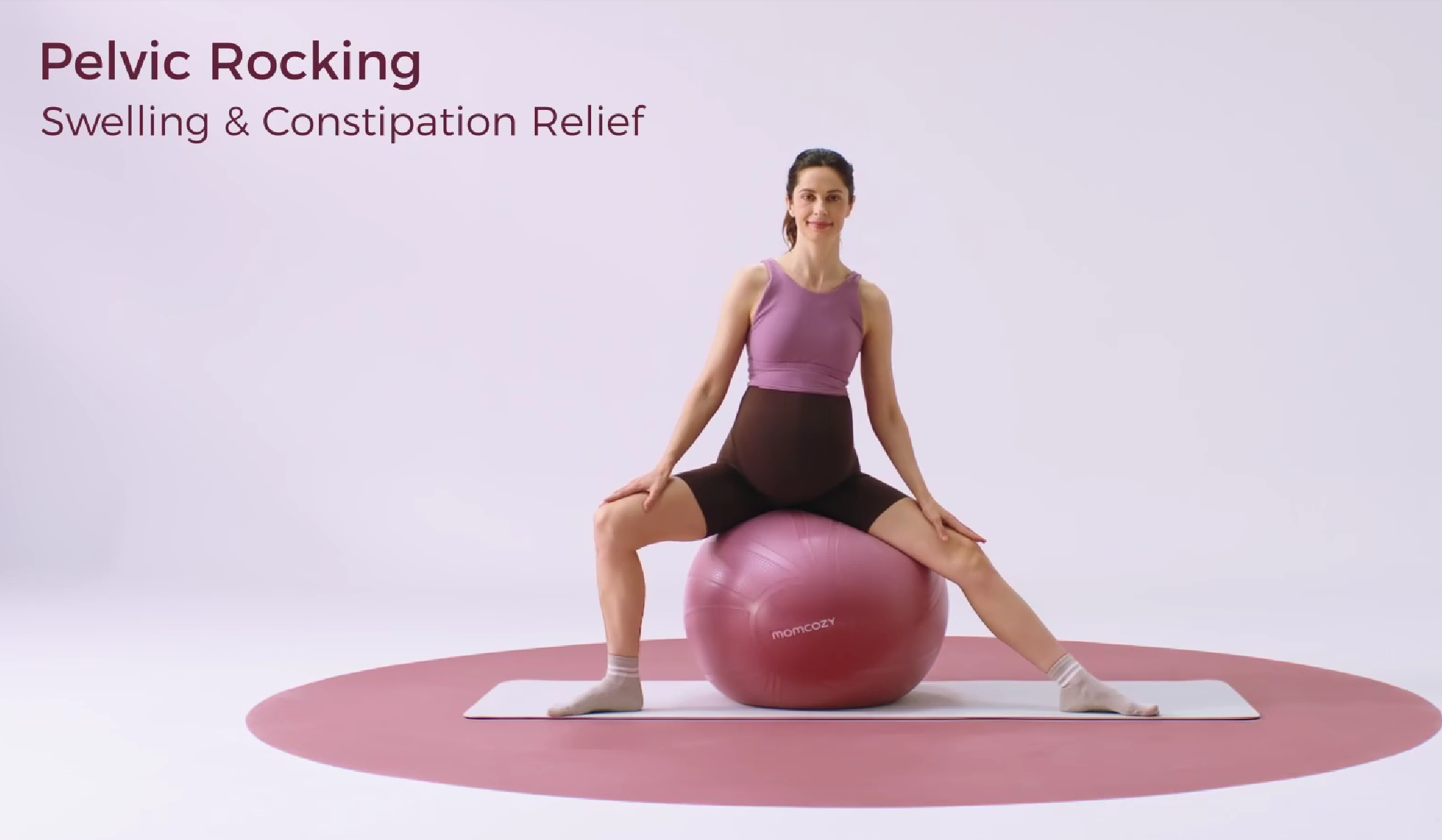
Pelvic Rocking
Sit right in the center of the yoga ball, hands resting on your knees. As you exhale, gently lift the right side of your pelvis, left leg lengthening naturally. Switch sides, lifting the left side of the pelvis, gently swaying side to side with small, controlled movements.
How to Relieve Back Pain While Pregnant
Upper and mid-back pain often gets less attention than lower back pain, but it is very common, especially as your breasts grow heavier and your shoulders start to round forward. These pregnancy back pain exercises target the thoracic spine, shoulder blades, and the muscles between your ribs.
First Trimester
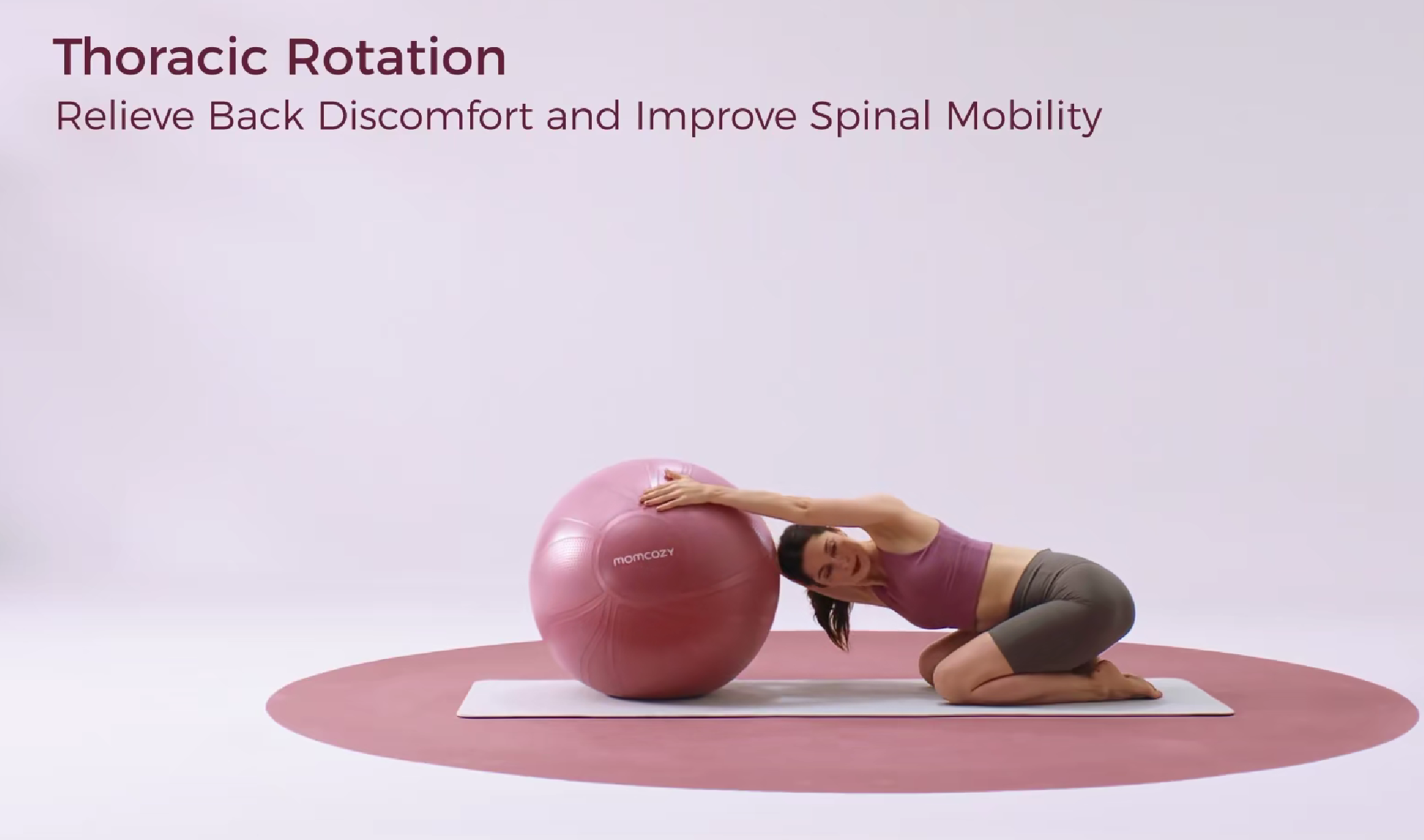
Thoracic Rotation
Kneel on the mat, knees slightly wider than the hips, hands holding the inside edge of the ball. As you exhale, gently roll the ball forward, letting the shoulder lower and rotate outward, upper back guiding the movement, gaze following the shoulder. Inhale to return to center. Switch sides.
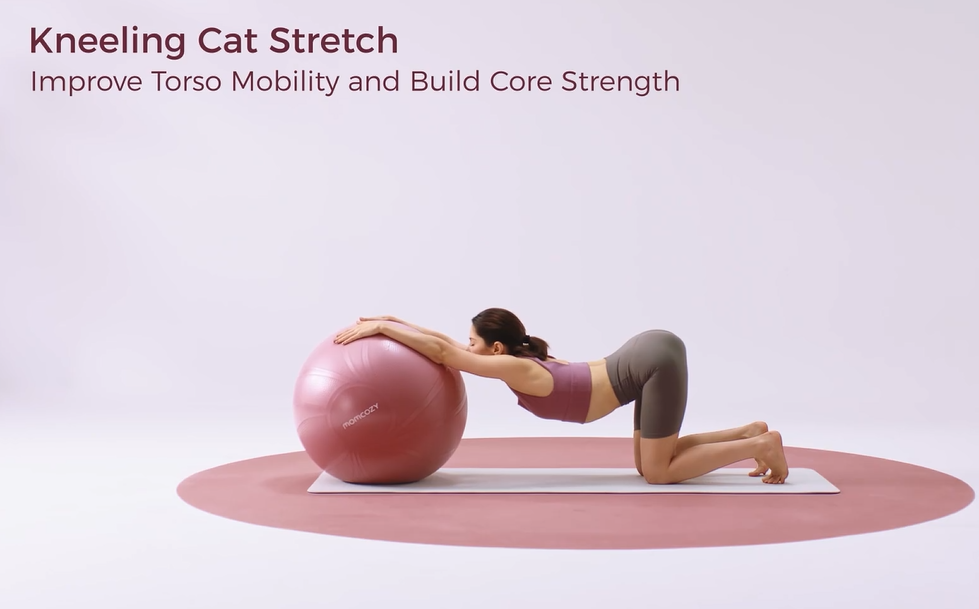
Kneeling Cat Stretch
Come onto the knees, thighs vertical to the floor, palms resting on top of the ball. Inhale to prepare. As you exhale, keep arms extended and gently roll the ball forward, back fully lengthening. Inhale to roll the spine back up from the tailbone, drawing the ball back.
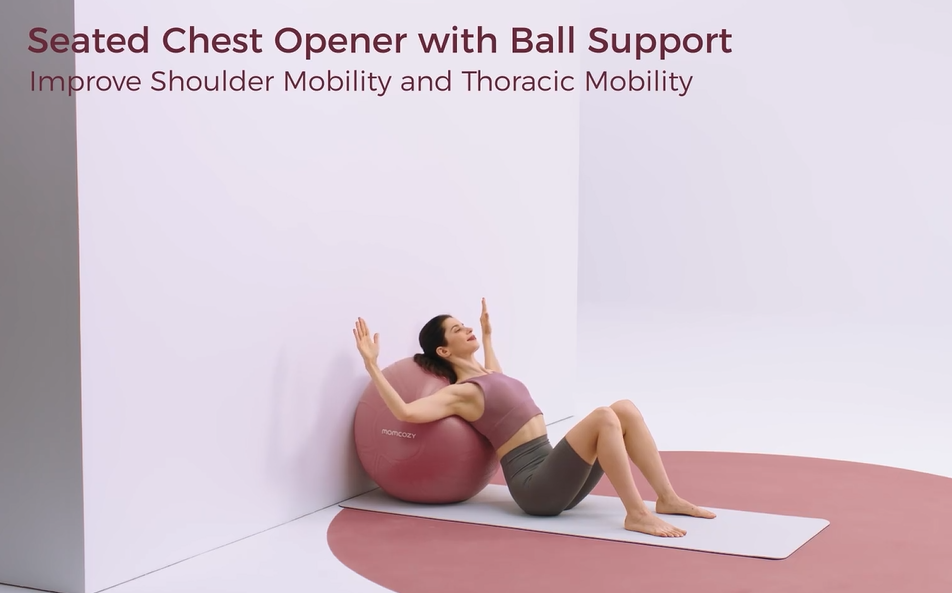
Seated Chest Opener with Ball Support
Place the ball against the wall, sit firmly on the mat, feet shoulder-width apart. Lean back, entire back resting against the ball, arms out to the sides, palms forward. Exhale to gently externally rotate the shoulders, forearms moving back toward the ball. Inhale to return.
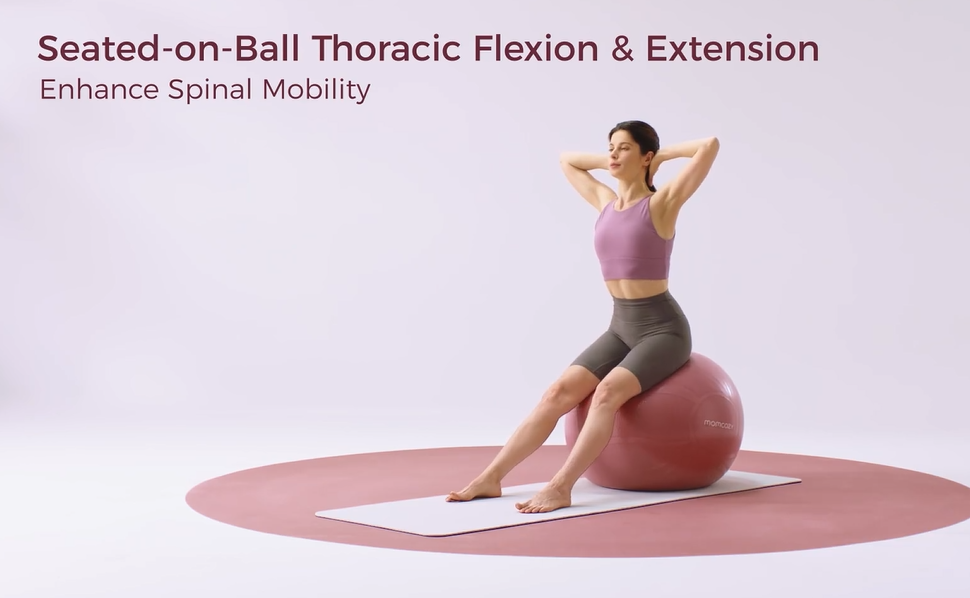
Seated-on-Ball Thoracic Flexion & Extension
Sit on the ball, feet hip-width apart, pelvis neutral, hands cradling the head. Inhale to open arms to the sides, chest opening. Exhale to tilt the pelvis back, round through the back, lower the head, arms drawing in. Keep the movement soft and controlled.
Second Trimester
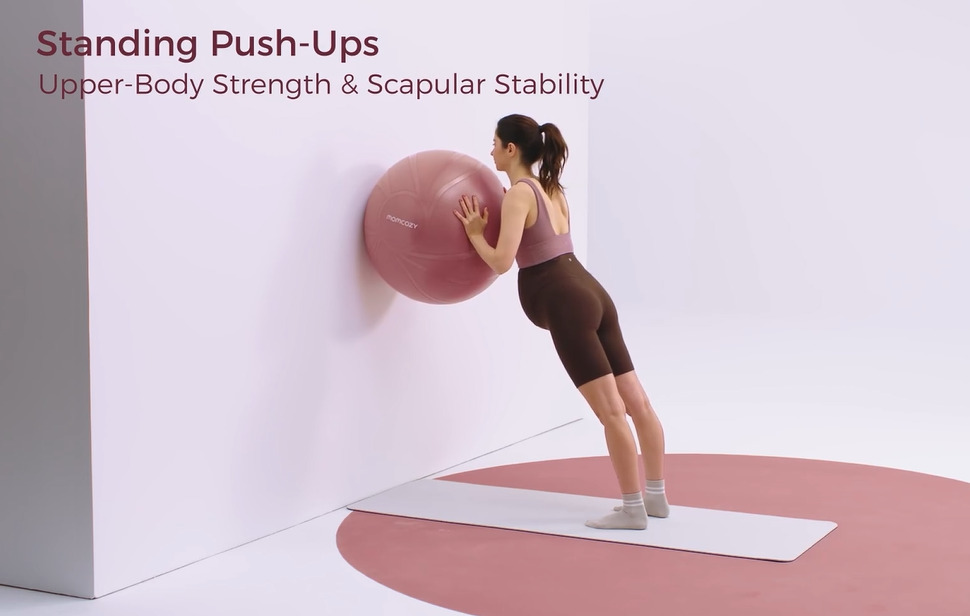
Standing Push-Ups
Place the ball against the wall. Open the hands to shoulder width and place them on the upper half of the ball. Let your body gently lean toward it. As you inhale, softly bend the elbows, allowing the chest to move toward the ball. As you exhale, press steadily back to the starting position.
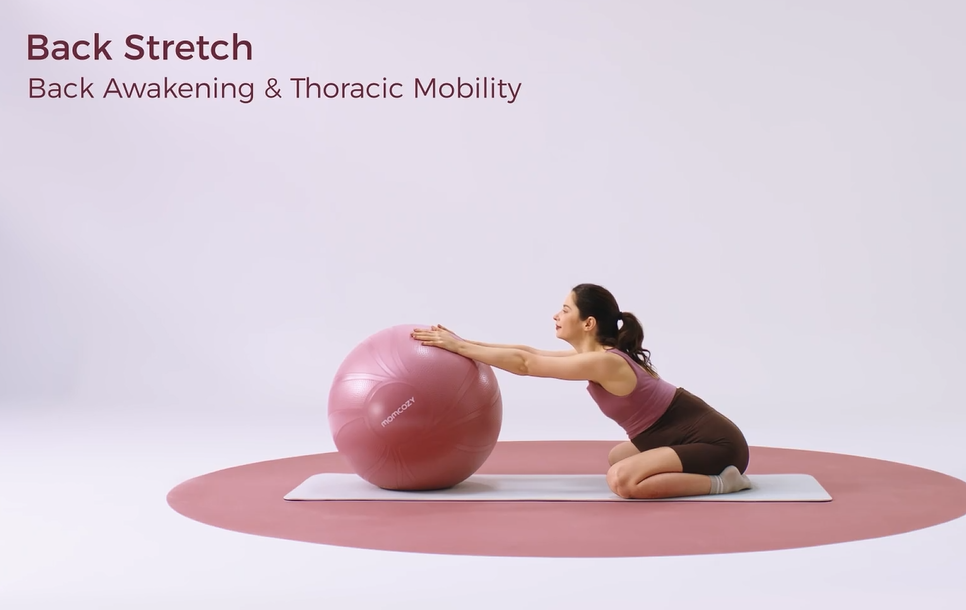
Back Stretch
Kneel on the mat, knees slightly wider, toes touching, hips toward heels, hands on the ball. Inhale to prepare. As you exhale, extend both arms forward and slowly roll the ball away, pelvis gently sitting back, back lengthening. Inhale to draw the ball back.
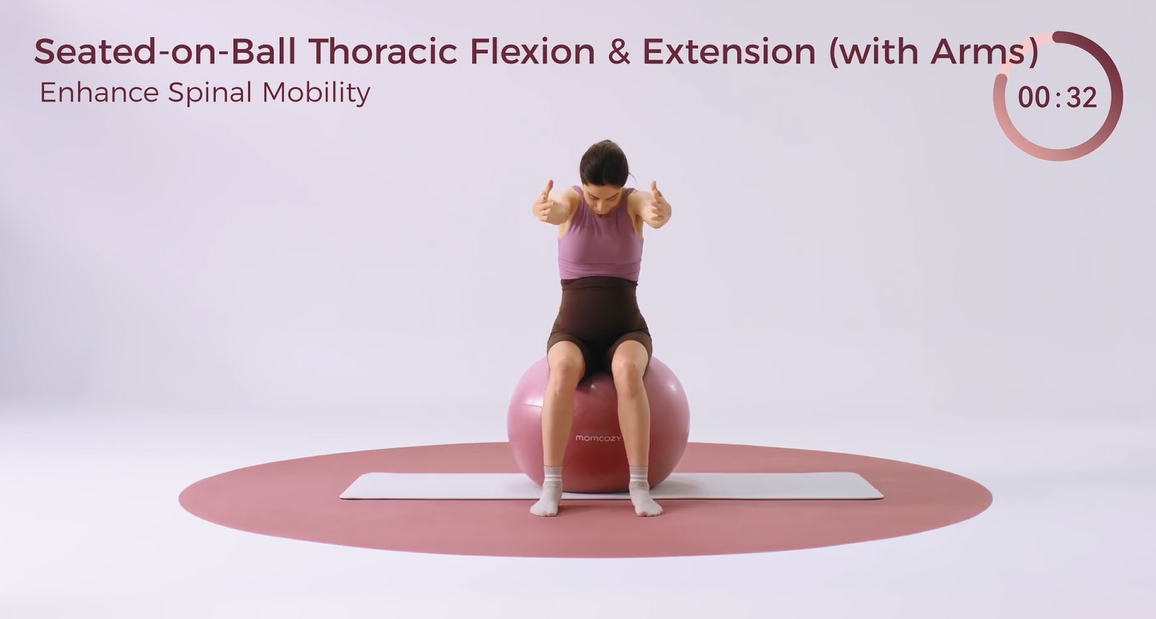
Seated-on-Ball Thoracic Flexion & Extension (with Arms)
Sit on the ball, feet hip-width apart, arms extended forward at shoulder height, palms facing each other. Inhale to open arms to the sides. Exhale to gently round the chest and lower the head. Maintain stability in the lower back and pelvis throughout.
Third Trimester
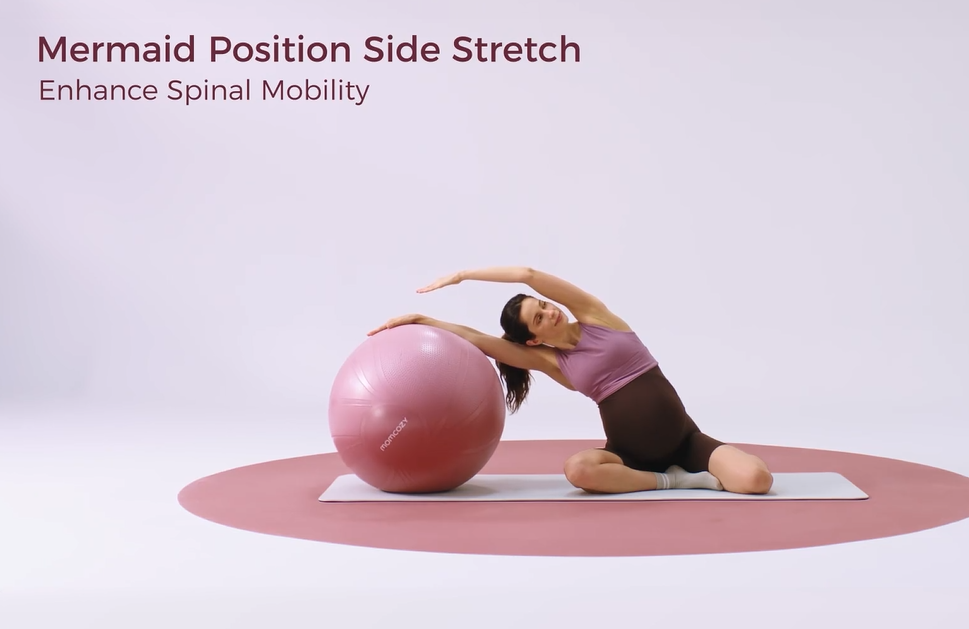
Mermaid Position Side Stretch
Sit comfortably on the mat, legs in a relaxed "Z" position, one hand resting on the ball. Inhale to prepare. As you exhale, slowly reach and extend to the side, the waist lengthening softly. Keep sit bones grounded evenly on the mat. Switch sides.
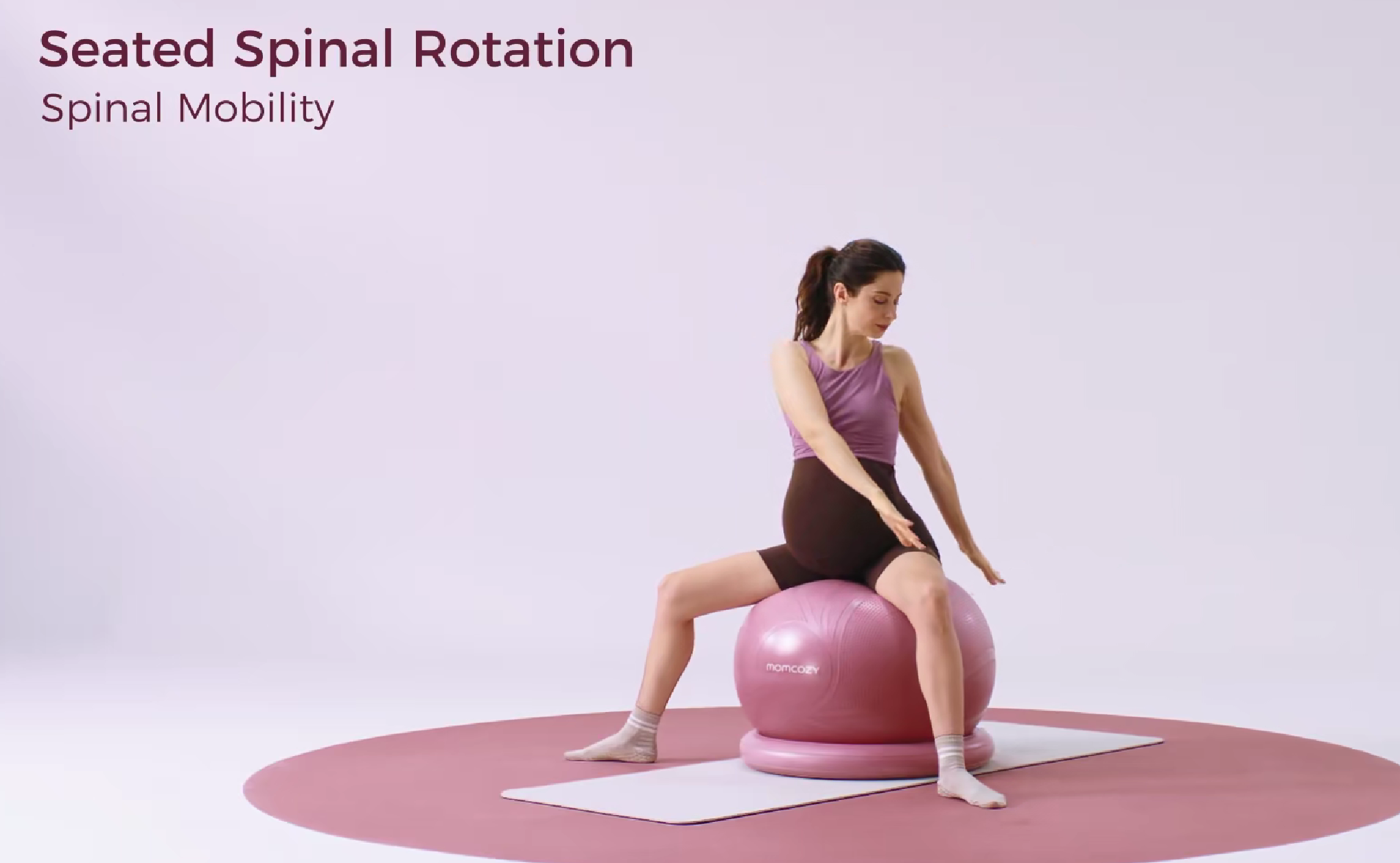
Seated Spinal Rotation
Sit evenly on the top of the ball, feet slightly wider than hip-distance apart, upper body upright, hands resting on the knees. Inhale to sweep arms overhead, palms facing each other. Exhale to let the arms guide the torso into a twist to the right, chest opening gently. Switch sides.
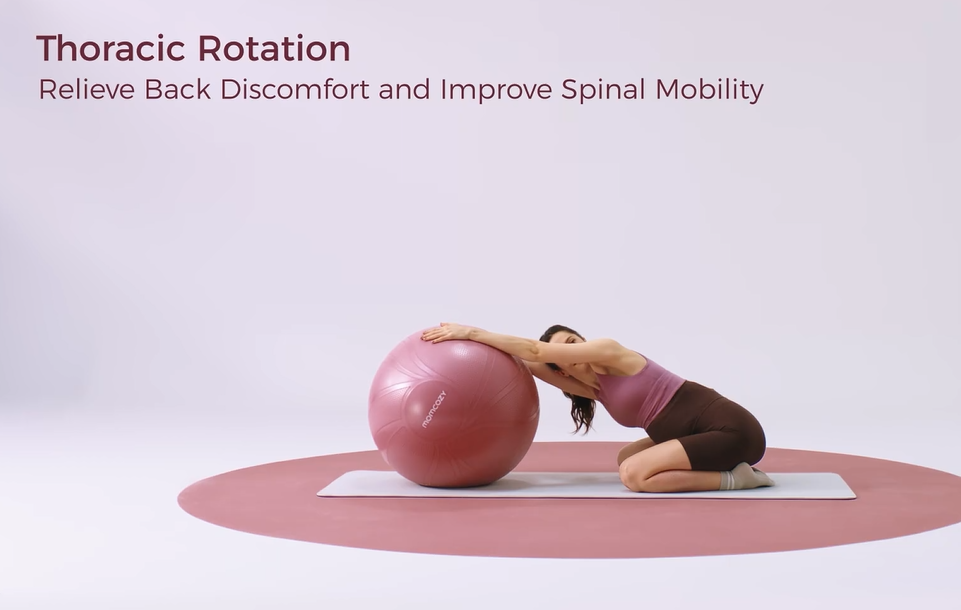
Thoracic Rotation
Come to a kneeling position on the mat, with the knees opening slightly wider than the hips. Place the yoga ball in front of you. Reach the arms forward and hold the inside edge of the ball. As you exhale, gently roll the ball forward, letting the shoulder lower and rotate outward. Allow the upper back to guide the movement, and let the gaze follow the direction of the shoulder. Exhale to return to center. Switch sides.
Other Safe Exercises During Pregnancy
In addition to targeted stretching, several low-impact activities are safe and beneficial for most pregnancies. Per ACOG guidelines, aim for at least 150 minutes of moderate activity per week. These options pair well with your stretching routine:
-
Walking supports circulation and is easy to adjust as your pregnancy progresses.
-
Prenatal yoga combines breath work, flexibility, and relaxation in one session.
-
Swimming or water aerobics reduces pressure on your joints and supports your growing belly.
-
Stationary cycling keeps your heart rate up with minimal fall risk.
-
Prenatal Pilates builds core strength and pelvic stability with pregnancy-safe modifications.
Talk to your provider before adding any new activity, particularly in the first trimester.
How to Exercise Safely and When to Stop
Safety Guidelines
These apply whether you are stretching, walking, or doing any other prenatal exercise:
-
Warm up for 5 minutes before starting any movement session.
-
Drink water before, during, and after exercise.
-
Avoid lying flat on your back after the first trimester for extended periods.
-
Stop if you feel pain. Discomfort is a signal, not something to push through.
-
Stay cool and avoid exercising in high heat or humidity.
-
Use stable surfaces. If you use an exercise ball, make sure it is burst-resistant, properly inflated, and placed on a non-slip floor.
When to Stop and Call Your Provider
Stop exercising immediately and contact your healthcare provider if you:
- notice vaginal bleeding or any fluid leaking.
- feel chest pain or have difficulty breathing.
- feel dizzy or faint.
- experience painful contractions or strong cramping.
- feel one leg becomes swollen, red, or painful.
- notice your baby is moving less than usual.
Activities to Avoid
| Activity Type |
Why to Avoid |
| Contact sports (soccer, basketball, martial arts) |
Risk of impact to the abdomen |
| High fall-risk activities (skiing, horseback riding, gymnastics) |
Risk of falls increases with shifting balance |
| Scuba diving |
Decompression risk to the fetus |
| Hot yoga or exercise in extreme heat |
Overheating risk, especially in first trimester |
| Extended time flat on your back (after first trimester) |
Can compress a major vein and reduce blood flow |
| High-altitude activities (if not acclimatized) |
Reduced oxygen availability |
Check with your provider before any activity you are uncertain about.
Find Your Comfort with Momcozy
Lower back pain during pregnancy is common, but consistent stretching makes a real difference. Start with 10 to 15 minutes a day and adjust the moves as your body changes each trimester. You can find the BirthEase Maternity Exercise Ball at Momcozy. It is designed to support you from the first trimester through birth preparation.
FAQ about Pregnancy Stretching and Pain Relief
Q1: Is it safe to use an exercise ball during pregnancy?
Yes, an exercise ball is safe for most pregnancies and is commonly recommended by midwives and physical therapists. It supports pelvic mobility, gently activates the core, and can relieve lower back and sacral pressure. Use a burst-resistant ball on a non-slip surface, and make sure it is inflated to a height where your knees are at a 90-degree angle when seated.
Q2: Can stretching cause a miscarriage?
No, gentle stretching does not cause miscarriage. Miscarriage is almost always related to chromosomal or developmental factors, not physical activity. Avoid deep twists, intense abdominal compression, or any movement that causes pain. If you have had previous pregnancy complications, confirm with your provider which movements are appropriate for you.
Q3: Can I do these stretches every day during pregnancy?
Yes, most of these stretches are gentle enough for daily use. Short sessions of 10 to 15 minutes each day are more effective than one longer session per week. If a move causes any pain or discomfort, skip it and check with your provider. As your pregnancy progresses, reduce the range of motion rather than stopping the stretch entirely.
Q4: How do you relieve sacrum pain during pregnancy?
The sacrum is the triangular bone at the base of your spine, and pain there is especially common in the second and third trimesters. Seated ball rocking, gentle pelvic circles, and forward folds over the ball are among the most effective moves for sacral relief. A warm compress on the area before stretching can also help loosen the surrounding muscles.
Q5: When does lower back pain in pregnancy peak?
Lower back pain tends to be most intense in the second and third trimesters, typically between weeks 20 and 36, as baby weight increases and postural changes accumulate. For some women, pain eases slightly near the end of the third trimester as the baby drops lower into the pelvis. Consistent stretching throughout pregnancy helps limit how severe the pain gets at its peak.